Eye Clinic in Karatu, Tanzania
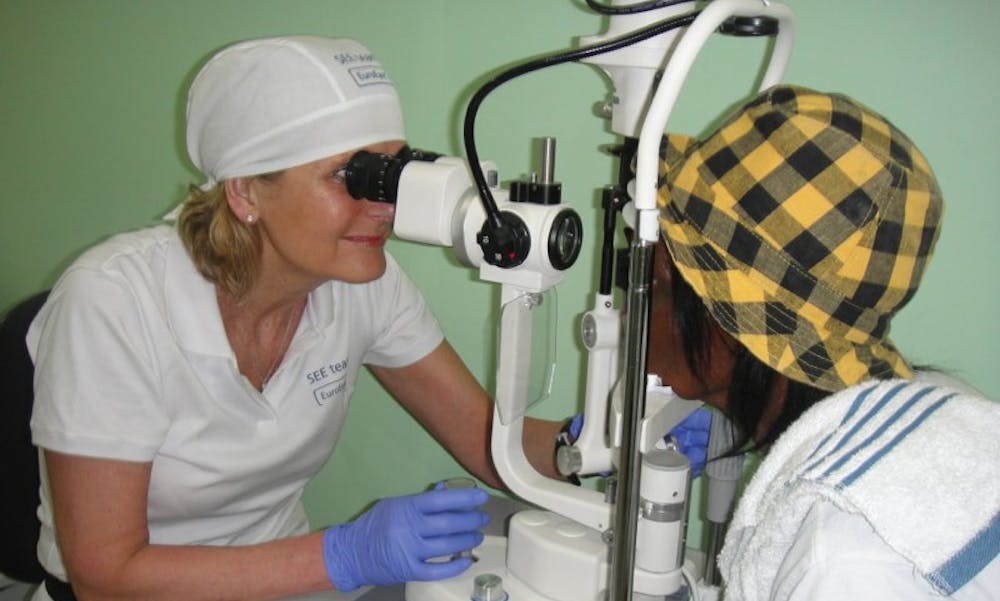
In September 2023, Red Synet visited Karatu Lutheran Hospital in Tanzania for another outreach mission with eye examinations and surgeries. In addition to the clinical work, a number of meetings were held with the hospital’s leadership as well as representatives from Kilimanjaro Christian Medical Centre (KCMC) and the university in Moshi.
During these meetings, an important agreement was reached: the Eye Rescue clinic in Karatu would become part of the training program for ophthalmologists. Experienced residents – doctors in the final stage of their ophthalmology training – would rotate through the clinic so that the area could receive a more permanent eye care service. This arrangement already came into effect in May 2024.
Intensive work in 2024
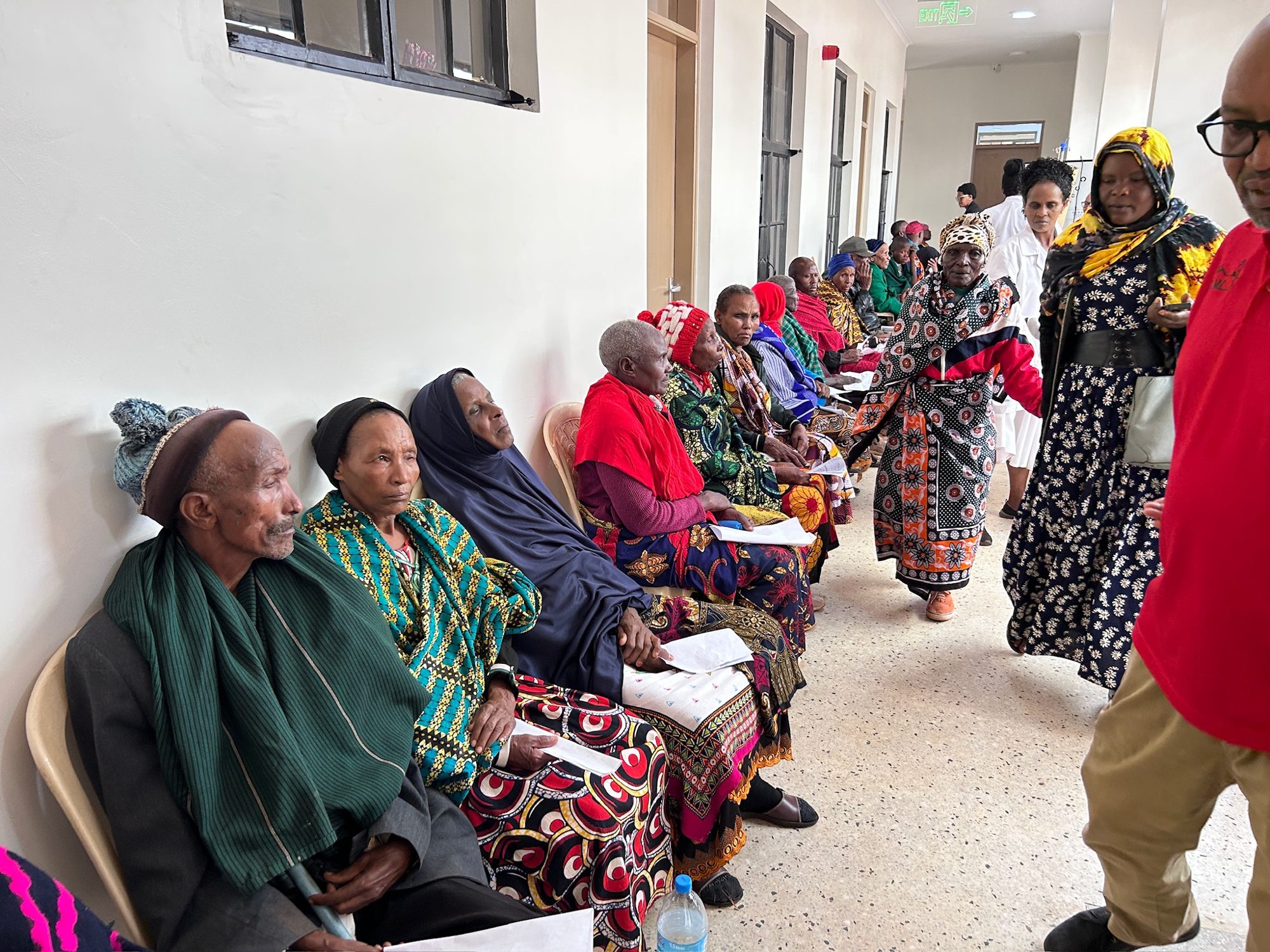
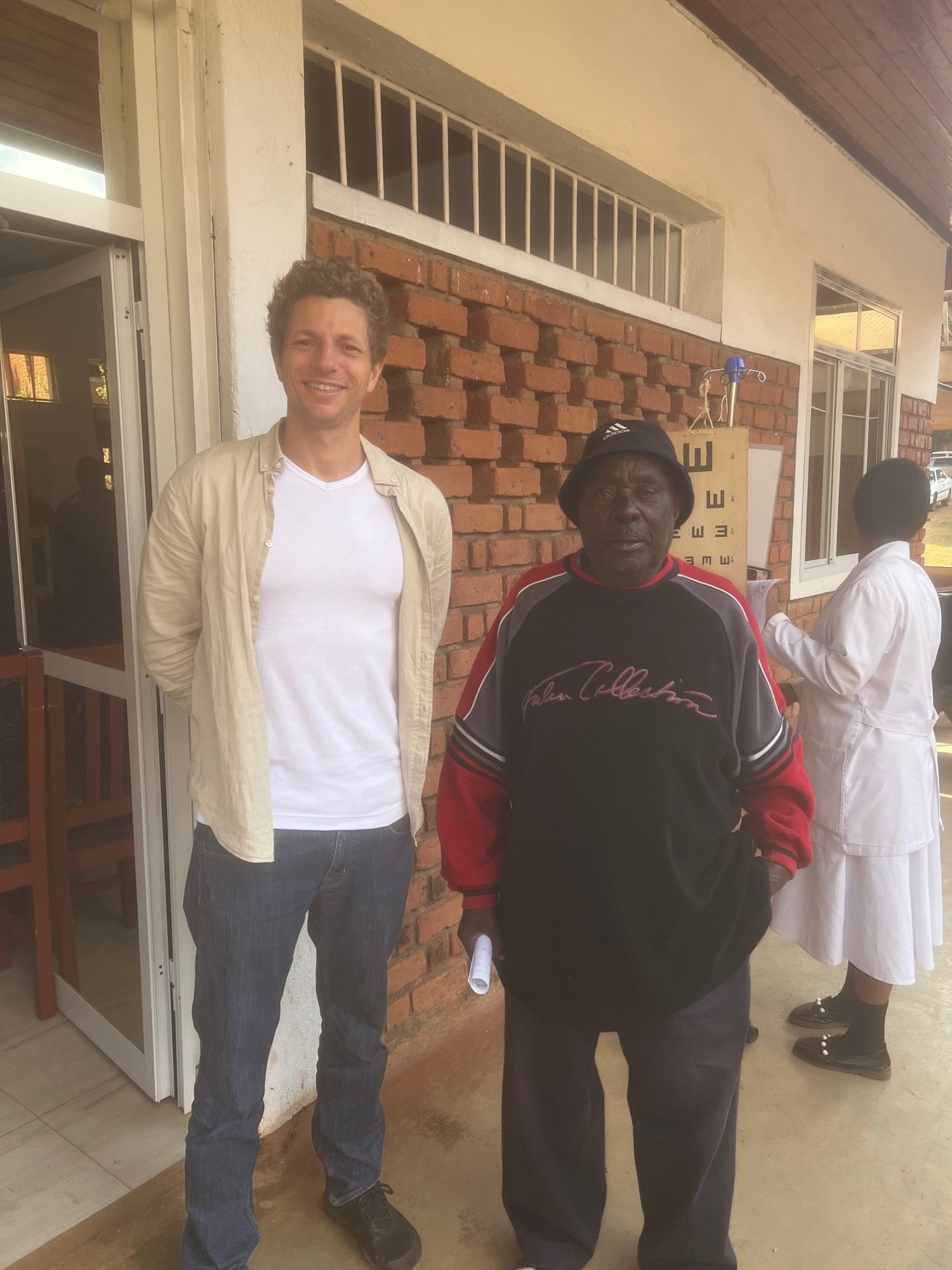
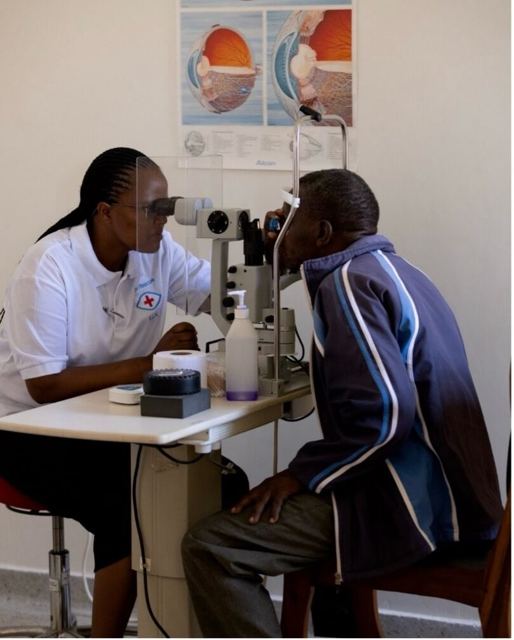
During the mission in January 2024, there was a great deal of activity at the clinic. While setting up the clinic and adjusting instruments, more than 100 patients arrived for examinations and surgery.
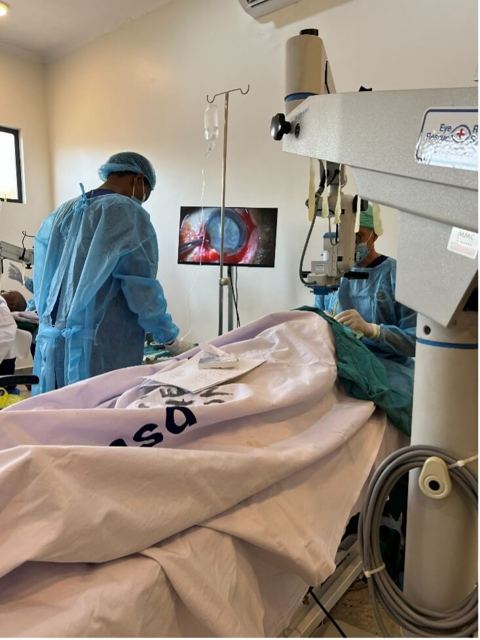
Our team included a chief surgeon from KCMC as well as three younger ophthalmologists from Tanzania, Cameroon, and Rwanda, all still in training. Together we provided intensive teaching in MSICS (Manual Small Incision Cataract Surgery) – a manual technique for treating cataracts that requires minimal equipment but produces results comparable to modern machine-based techniques.
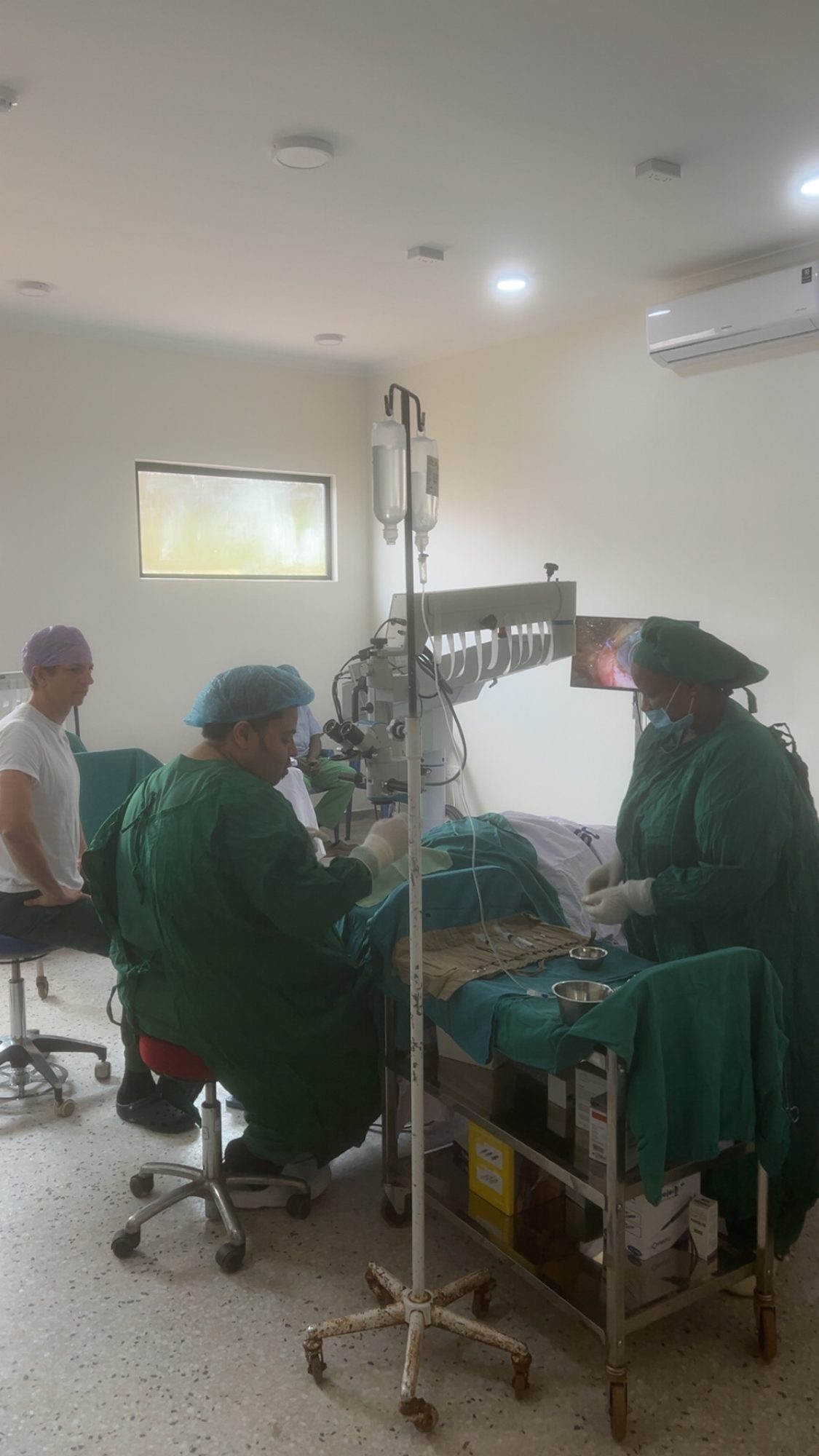
The work often takes place under simple conditions. Patients are registered in logbooks, medical records are prepared, and those who need surgery have their eyes measured so that the correct intraocular lens can be selected. Before surgery, the eye is anesthetized and clearly marked to ensure the correct eye is operated on.
Operations are carried out on two surgical tables. Here experienced surgeons closely supervise the procedures and instruct younger colleagues in techniques and surgical skills. One microscope is equipped with video and a large screen, allowing the operations to be followed more easily for teaching purposes. If a case is particularly complicated, the chief surgeon takes over to ensure the safest possible outcome.
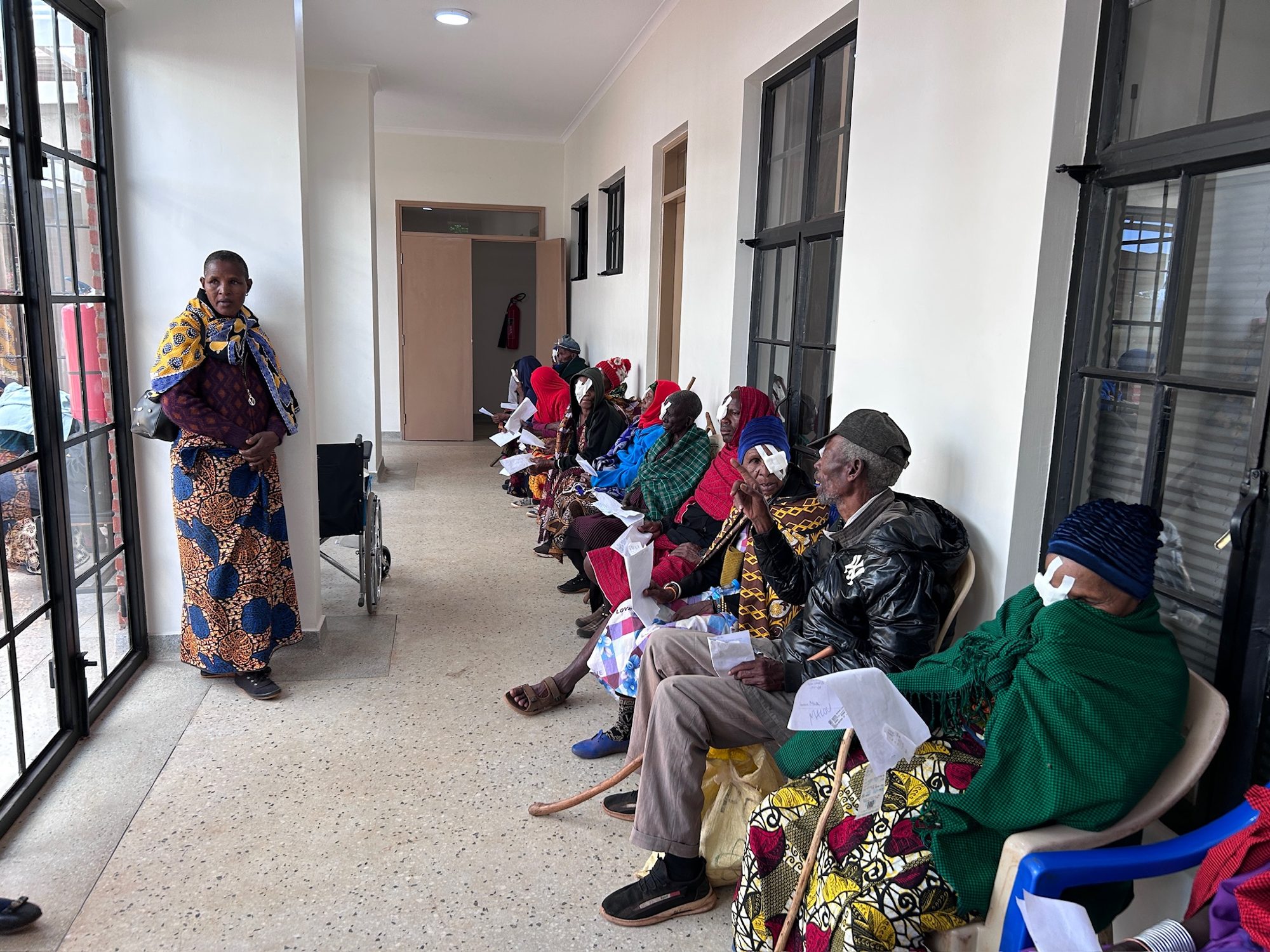
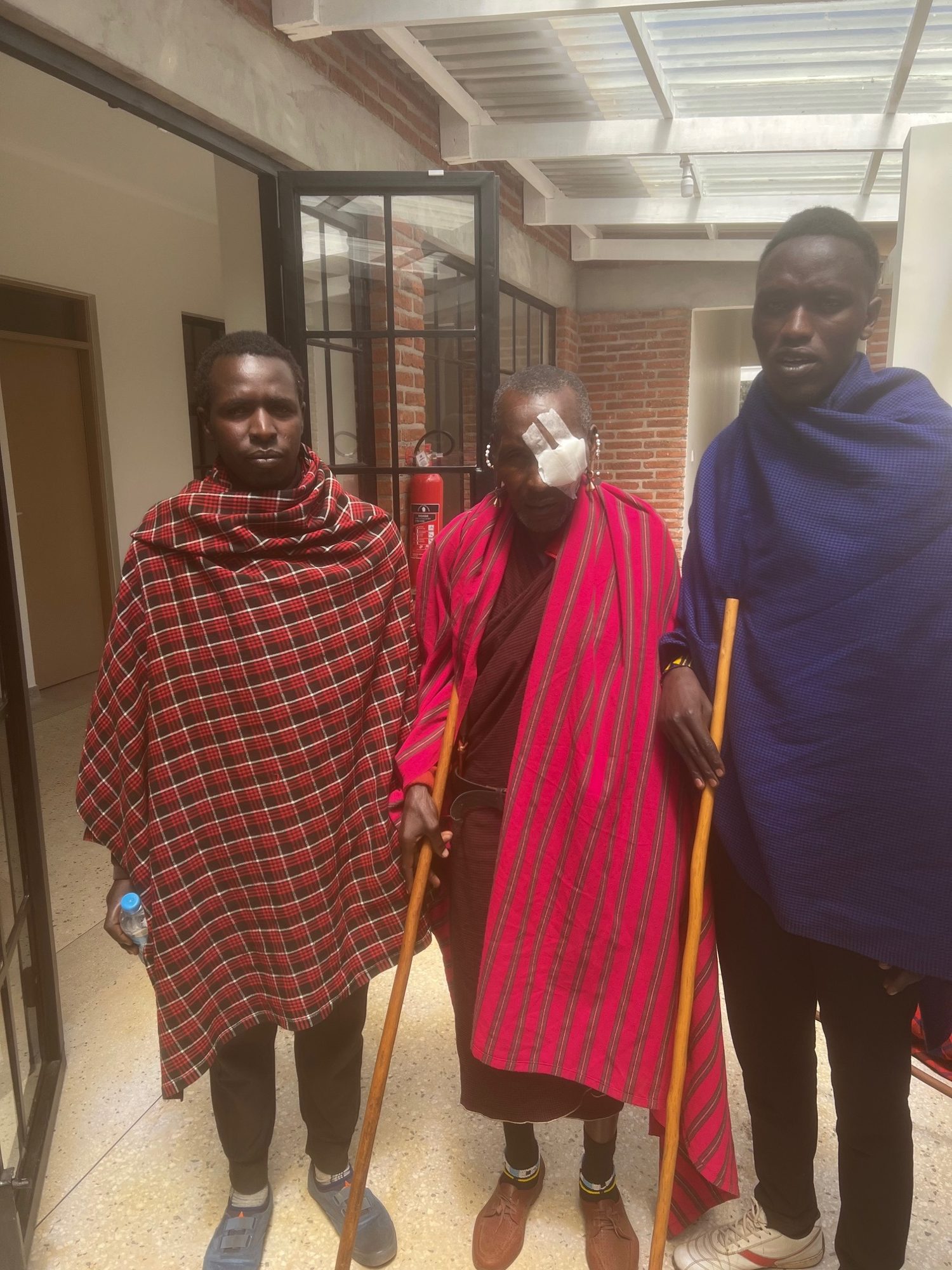
After surgery, the patient receives medication and a protective eye dressing. Before leaving, all patients receive thorough instructions and return for follow-up the next day.
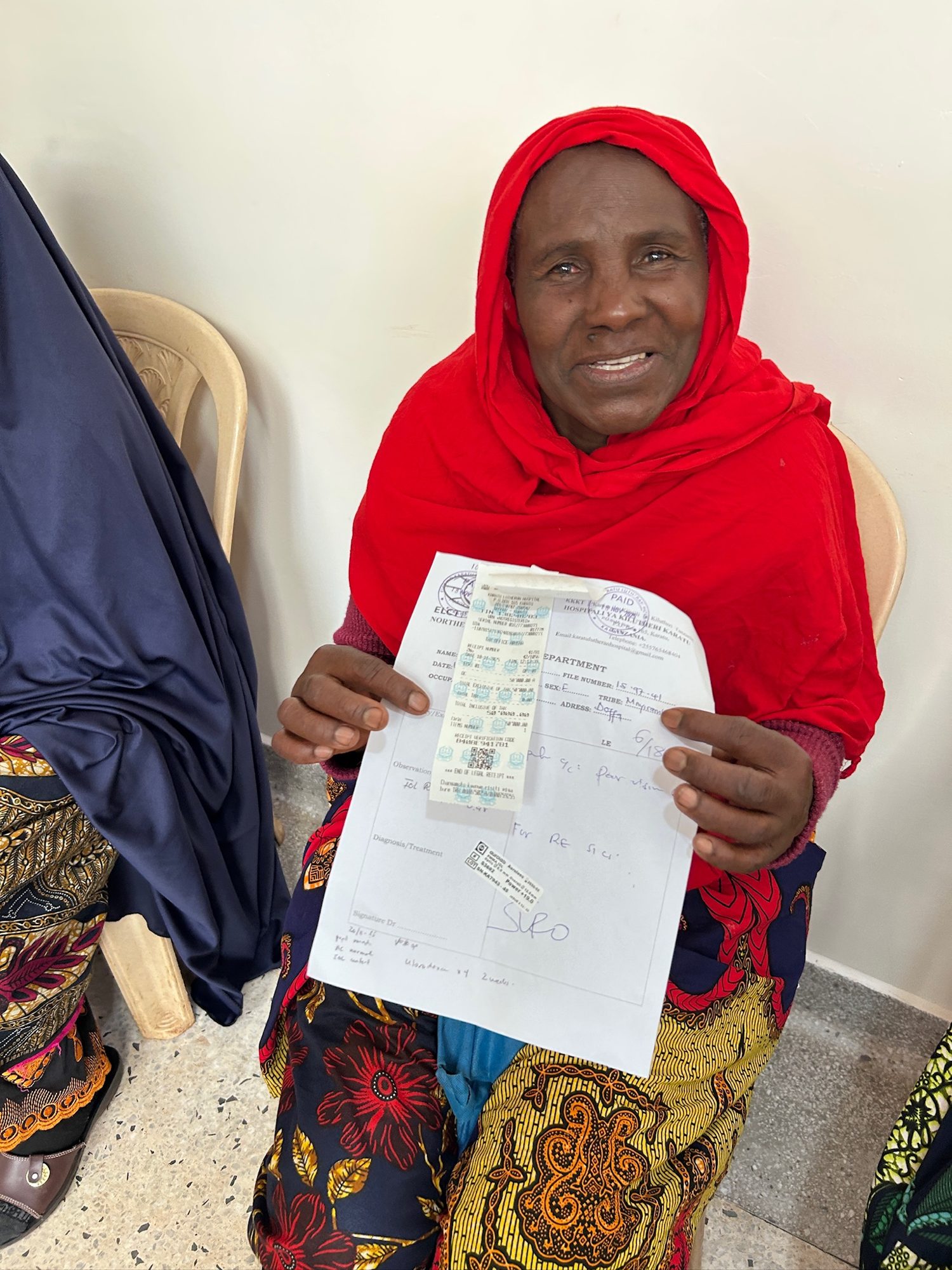
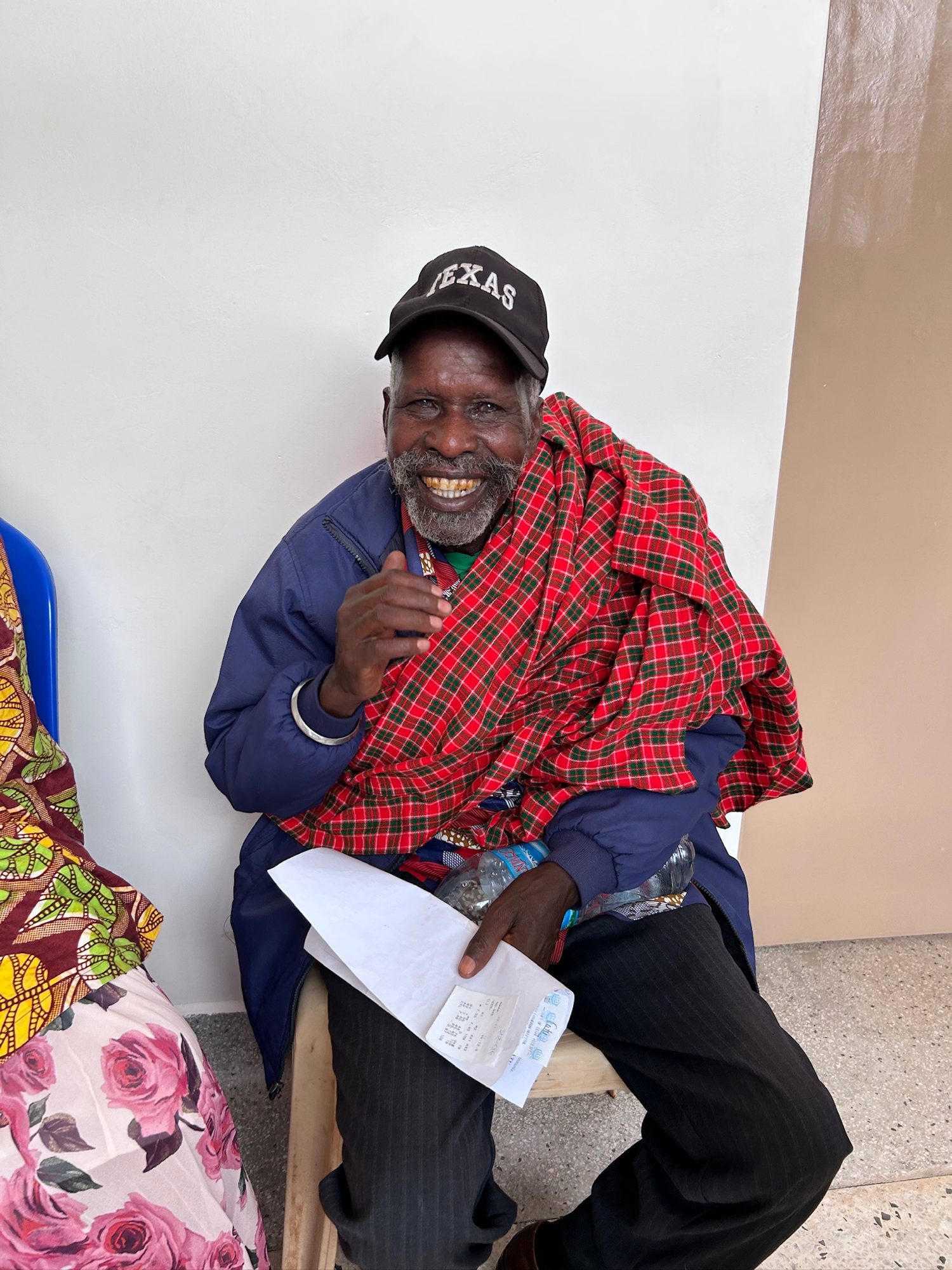
For many patients, the moment when the eye patch is removed the day after surgery is very special. First comes the surprise of being able to see again – followed by overwhelming joy. Many smile and cry as they study the faces of their relatives, whom they often have not been able to see clearly for years.
Many smile and cry as they study the faces of their relatives, whom they often have not been able to see clearly for years.
- 100+
- patients in January 2024
- ~150
- patients in June 2024
- 28
- operations in June 2024
In June 2024, nearly 150 patients were examined and treated, and 28 operations were performed. During the same visit, an important meeting was held with the Bishop of Tanzania and the hospital leadership, ensuring that the project had full support. Only the final legal formalities remained.
During this mission, a technician from our Danish supplier of ophthalmic equipment also participated, ensuring that all equipment was installed and set up correctly.
As part of the work, Red Synet and Karatu Lutheran Hospital have also hired a full-time optician who measures vision and fits glasses. Many frames are reused and fitted with new lenses, making the work both economically and environmentally sustainable.
The vision of a new eye clinic
During 2024, the plans for a new eye clinic began to take shape. During one of the trips, a meeting was held at the airport with two architects from Triple A Architects, where the first sketches and ideas were discussed.
About a month later, an online meeting followed, where detailed drawings clearly demonstrated the difference a new clinic building could make for both treatment and training.
In 2024, we received a generous private donation that made it possible to realize the project.
Construction of the clinic
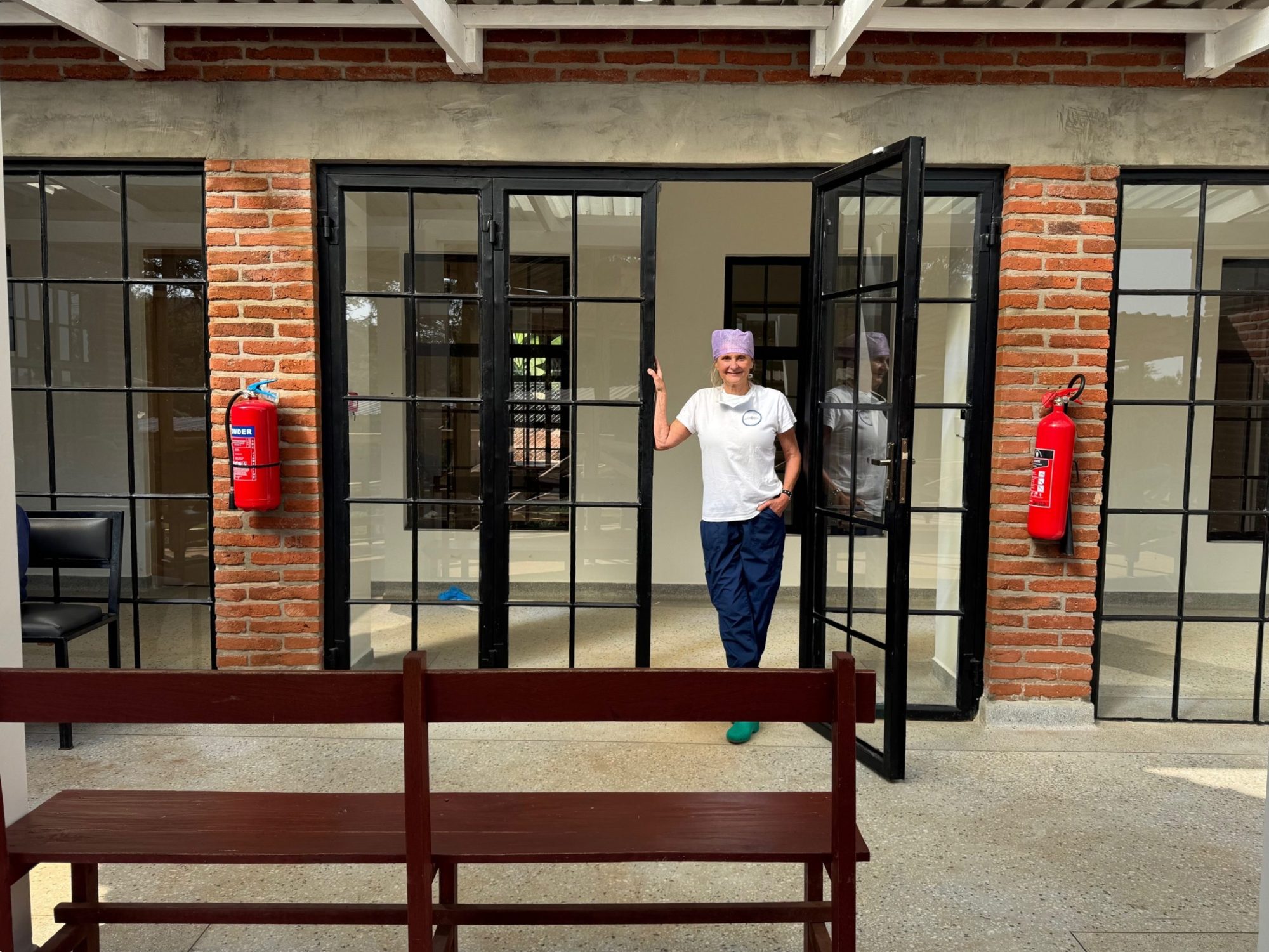
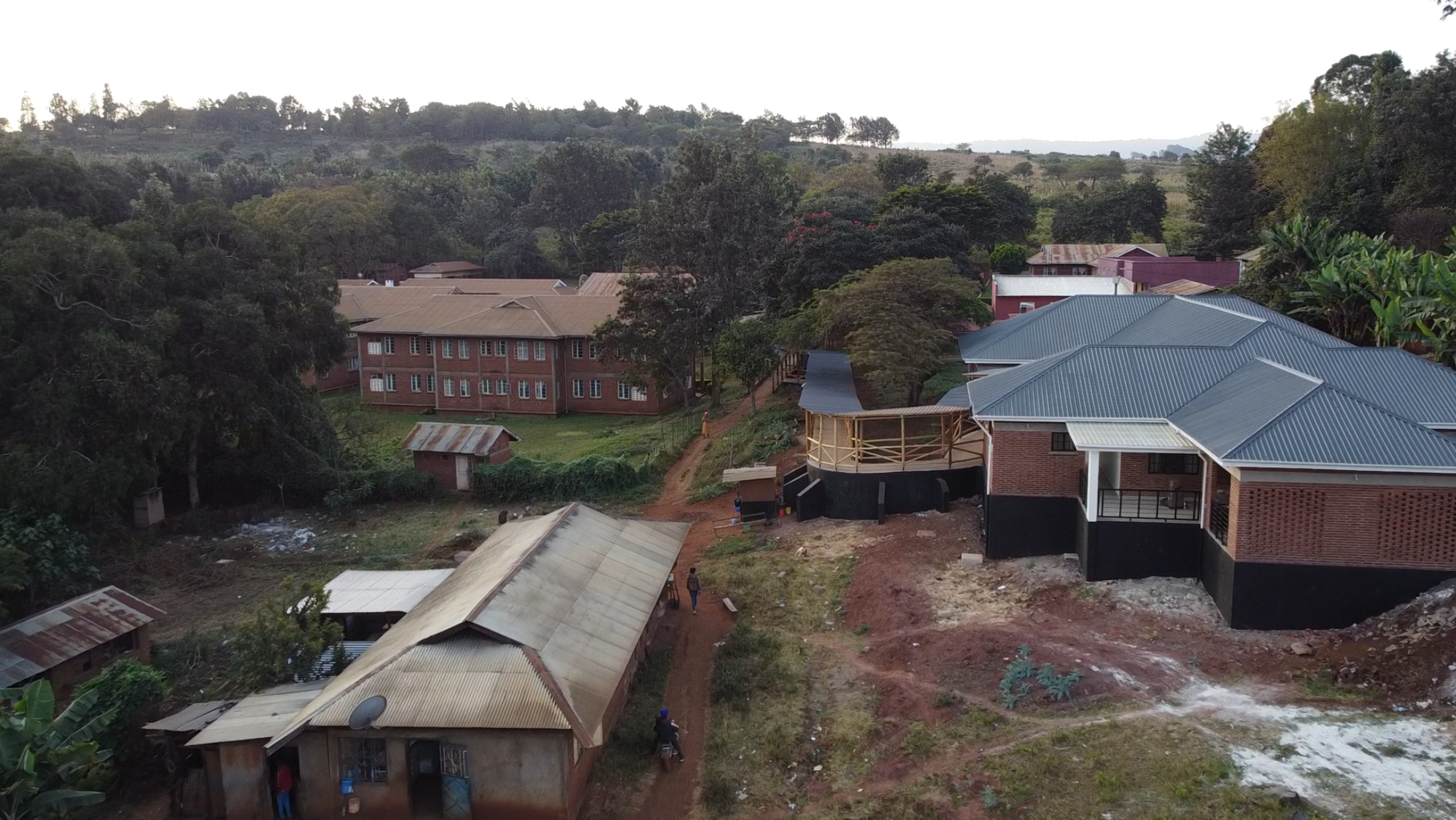
Construction of the new eye clinic at Karatu Lutheran Hospital began in February 2025. By August 2025, the building was already completed – a modern and accessible clinic that now forms the foundation for future eye care in the region.
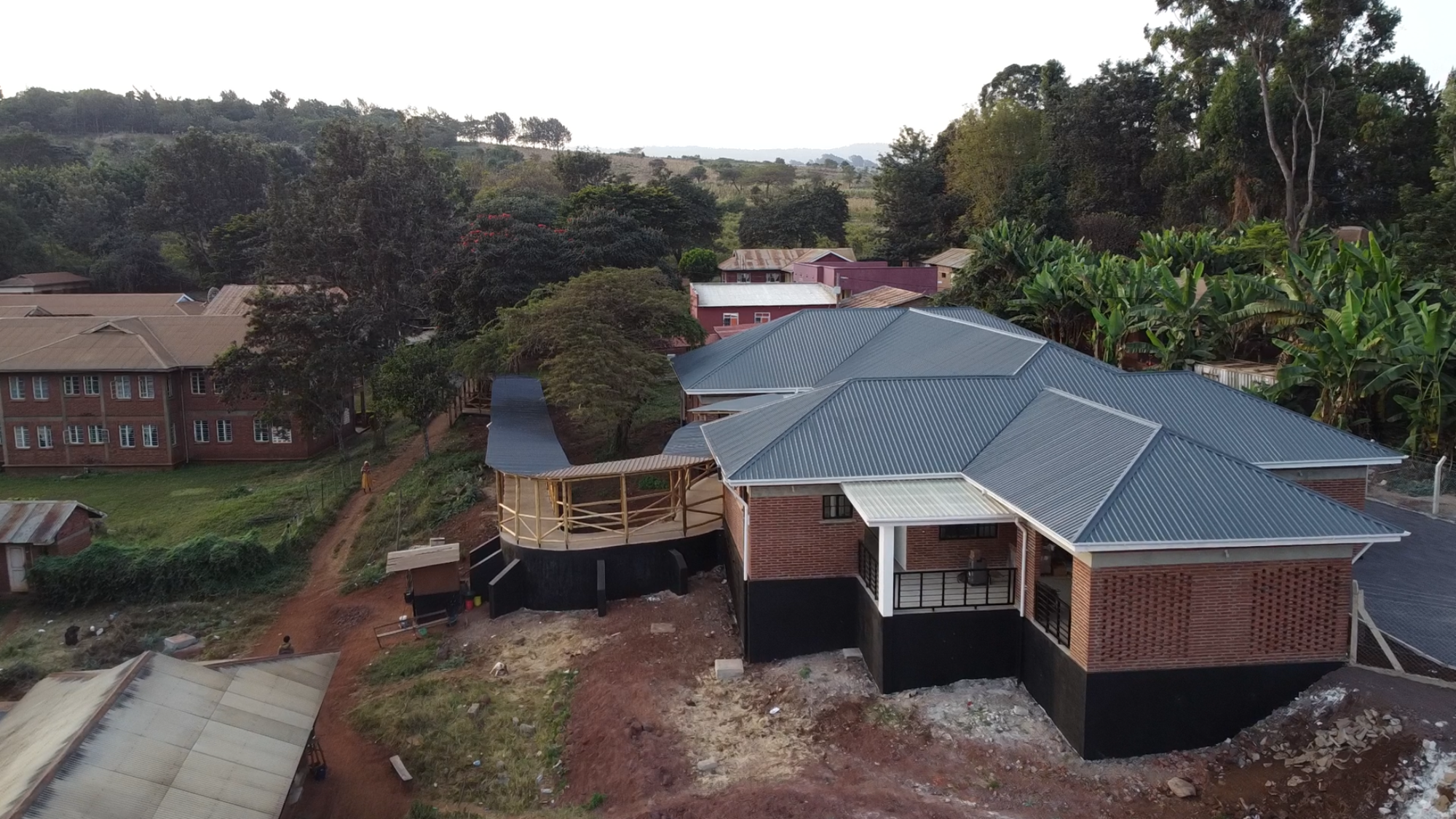
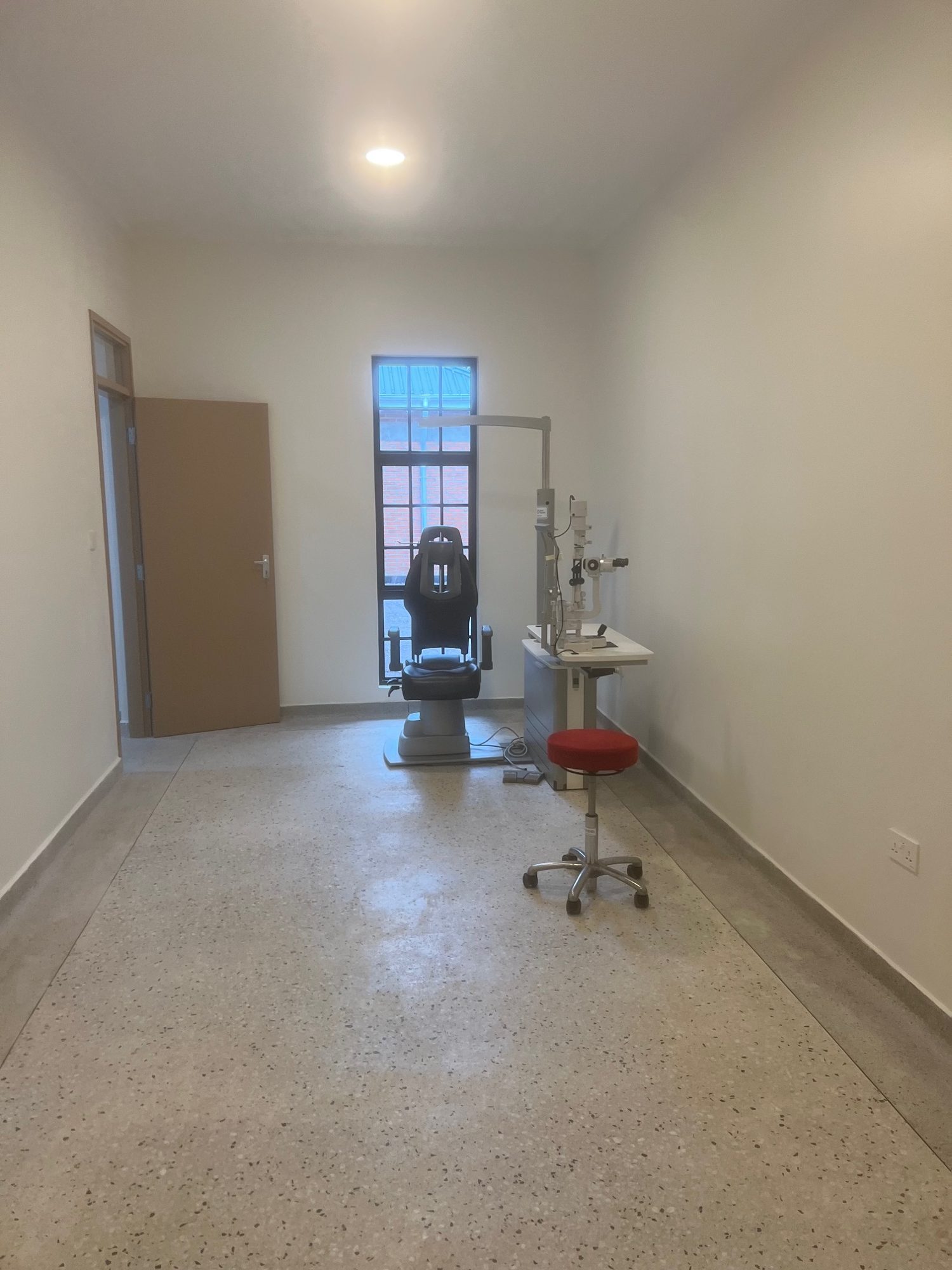
The clinic was subsequently furnished with furniture and advanced surgical equipment, which was installed during the autumn of 2025.
The purpose of the clinic is to create a permanent center for treatment and education. The clinic also functions as an academy where ophthalmologists from both Tanzania and other countries can receive practical training in MSICS surgery.
At each outreach, ophthalmologists from KCMC in Moshi participate. They receive intensive surgical training free of charge, while international participants pay a course fee that contributes directly to the clinic’s operation and long-term sustainability.
The inauguration in January 2026
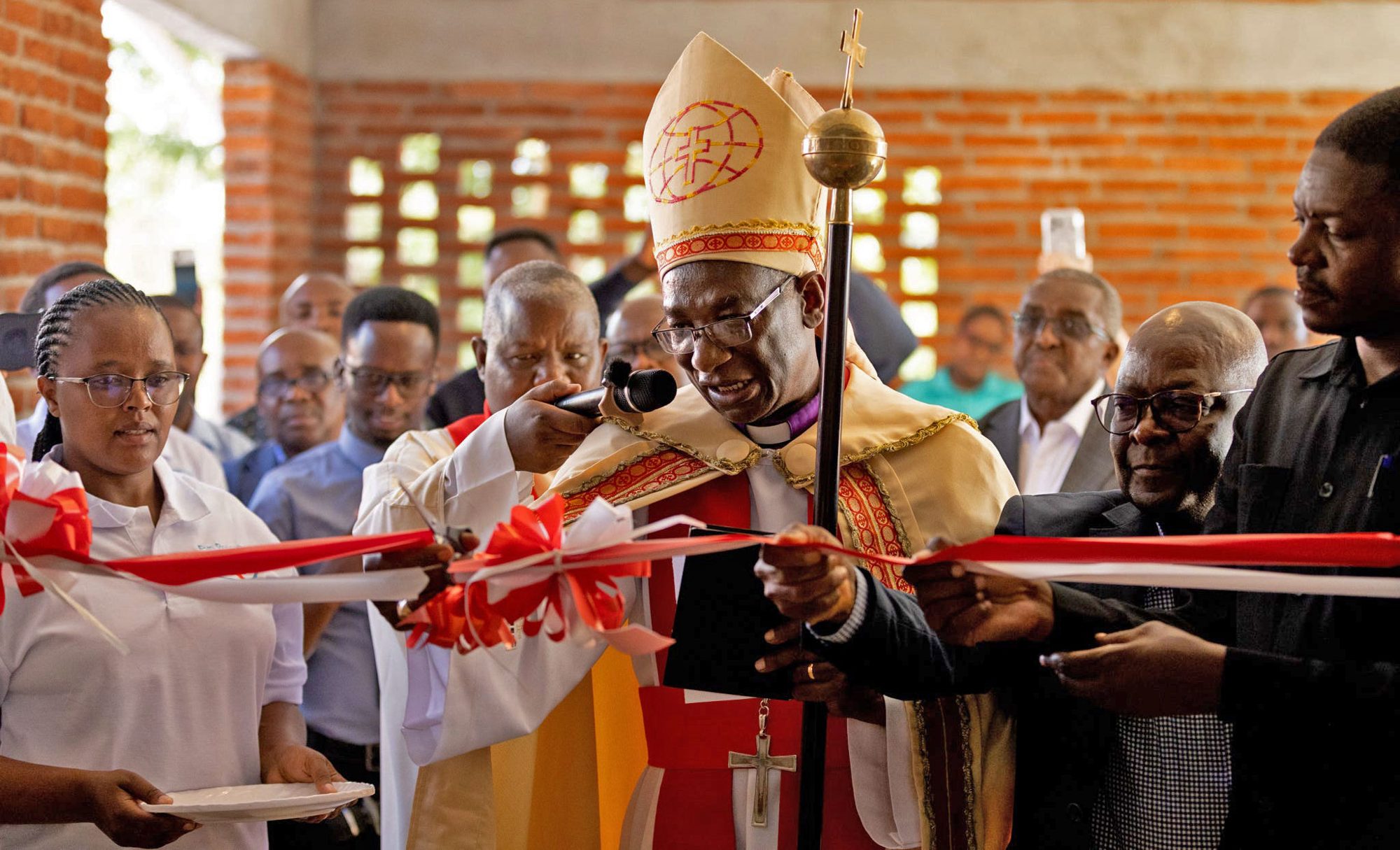
On January 19, 2026, the new eye clinic was officially inaugurated during a festive ceremony attended by between 200 and 300 participants.
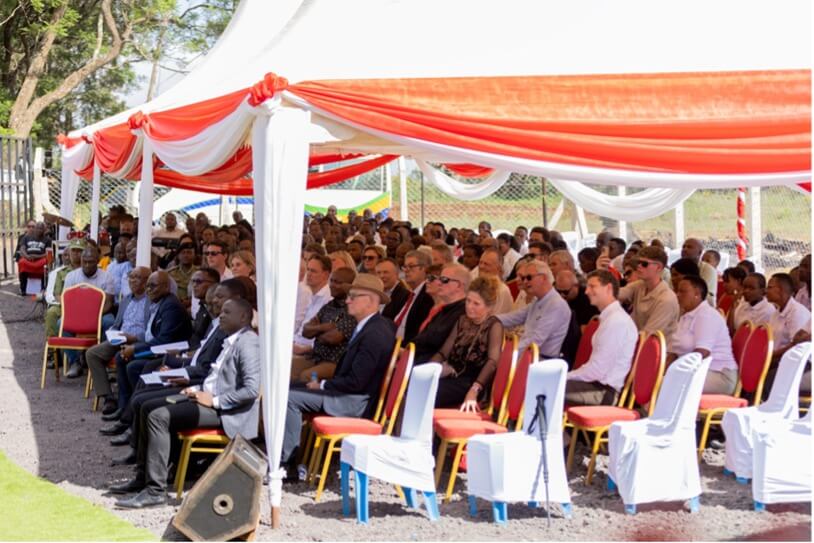
Large white tents, red ribbons, church choirs, orchestras, and colorful dance performances created a very special atmosphere. The bishop, district leadership, and other distinguished guests attended the celebration.
The hospital’s director and representatives from the district and the Lutheran Church delivered speeches emphasizing the importance of the project. All agreed that the clinic represents a turning point for eye care in the area and an important step in the development of both the hospital and the region.
Special thanks were given to the Danish donor who financed the construction of the new clinic. After the cutting of the red ribbon, the building was presented to the guests, and both professionals and the bishop described it as the best equipped eye clinic in Tanzania.
At the same time, our collaboration with the organization HelpMeSee has enabled a significant upgrade of surgical training in Moshi, where an advanced surgical simulator now raises the quality of both education and surgery to an international level.
The opening marks the beginning of long-term work to establish strong structures, registrations, guidelines, and procedures that will ensure efficient and sustainable operations for many years to come.
The project has already created positive ripple effects. At the inauguration, the district commissioner promised to improve the road from the main road to the hospital at his own expense – and just a few days later, three road machines had already begun the work.